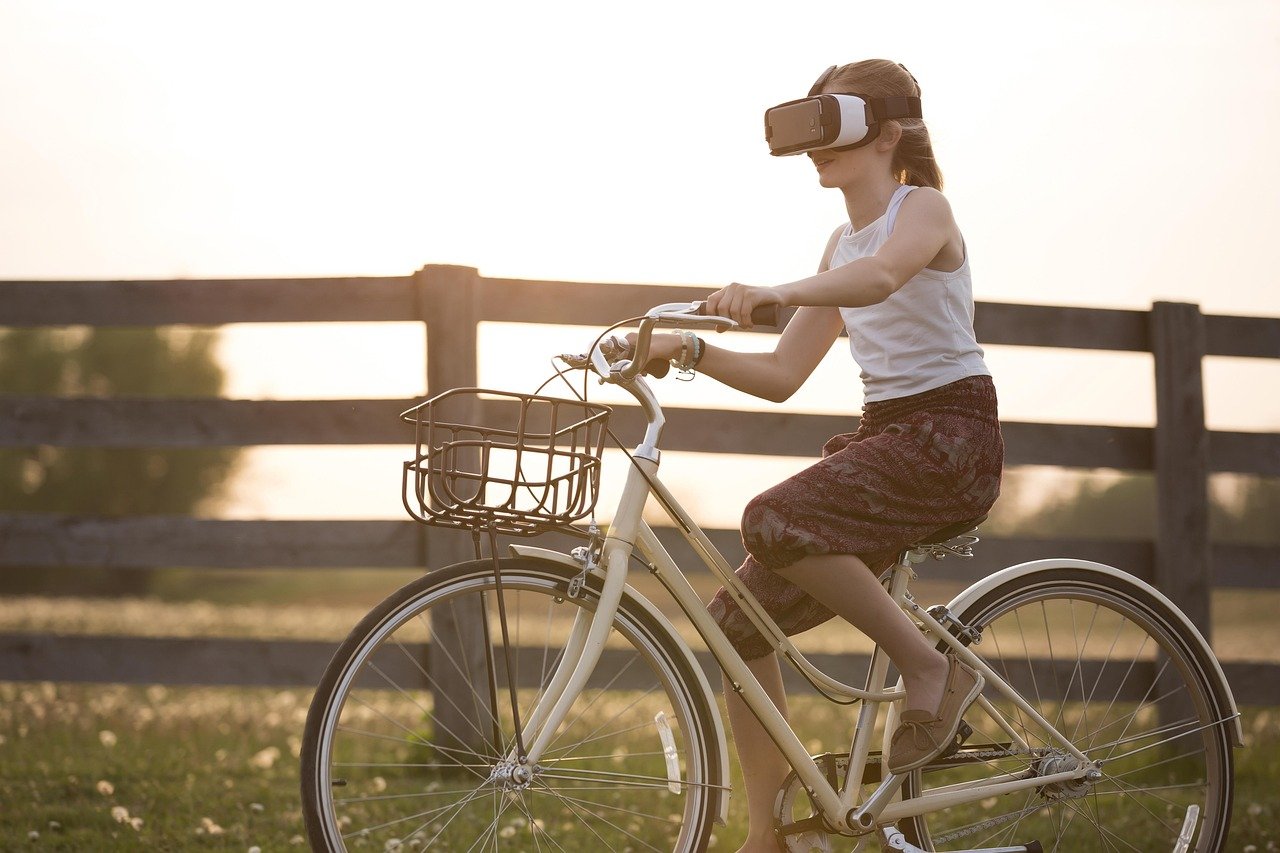

I never expected a virtual reality experience to bring me to tears. But there I was, wearing a VR headset, fully immersed in the story of Chestnut—a young pangolin struggling to survive in the Kalahari Desert. The vast, dusty landscape stretched in all directions, and her small, armored body curled up helplessly in search of warmth and safety. Based on a real pangolin tracked by scientists, her story unfolded with heartbreaking realism. She hadn’t found enough ants to eat due to climate change, and despite her hopeful voice, exhaustion took over. As the final scene played out, I lifted my headset to wipe away tears.
VR is proving to be more than just entertainment—it’s an emotional powerhouse that can change the way we see the world. Studies reveal that immersive storytelling in VR can deepen empathy and inspire action, particularly when it comes to environmental awareness. Traditional media often fails to evoke strong emotions about climate change, but VR’s ability to transport us directly into these experiences makes the crisis feel personal and urgent.
One company leading the charge is HabitatXR, a production studio in Johannesburg. Founder Ulrico Grech-Cumbo realized he could turn his nature footage into fully immersive experiences, making people feel as if they were inside a documentary. Their projects take viewers deep into the African savannah, where they come face-to-face with rhinos, wildebeests, and other wildlife. Even with pixelated graphics, the illusion is powerful—when a rhino’s horn swung too close, I instinctively moved back, feeling the weight of its presence.
The emotional impact of VR is undeniable. At a fundraising event, high-profile donors—people dressed in luxury watches and sipping champagne—were reduced to tears within minutes of experiencing HabitatXR’s storytelling. That’s something no traditional film could achieve on such a massive scale. Research backs this up: VR generates stronger emotional responses than articles or videos, making us feel truly present in the moment.
This deep emotional engagement has real-world effects. Studies show that people who experience nature in VR are more likely to support environmental causes, sign petitions, or even change daily habits like energy consumption. VR triggers a powerful sense of awe—a feeling of being part of something vast and beyond our understanding. Psychologists have found that awe increases our willingness to make sacrifices for the planet, reinforcing our connection to nature in ways that static media simply can’t.
Despite its potential, VR is still not widely accessible. High costs and limited availability prevent many from experiencing its transformative power. However, companies like HabitatXR are working on solutions, including a VR “Zoo of the Future” that brings virtual ecosystems into cities. The goal is to highlight the deep connections between species—including us—and remind people that nature isn’t something separate; we are part of it.
VR won’t replace real-world nature, nor should it. Studies suggest that while virtual nature experiences can educate and inspire, they don’t provide the same mental health benefits as real outdoor spaces. But for the millions who lack access to green areas, VR could be a game-changer, offering a window into the wild and a call to action to protect it.
As the credits rolled on Chestnut’s story, a final message appeared: “This isn’t a story about pangolins. Or ants. Or even climate change. This is a story about us.” That’s the power of VR—it doesn’t just show us the world; it makes us feel it. And sometimes, feeling is the first step toward change.

 By
By