
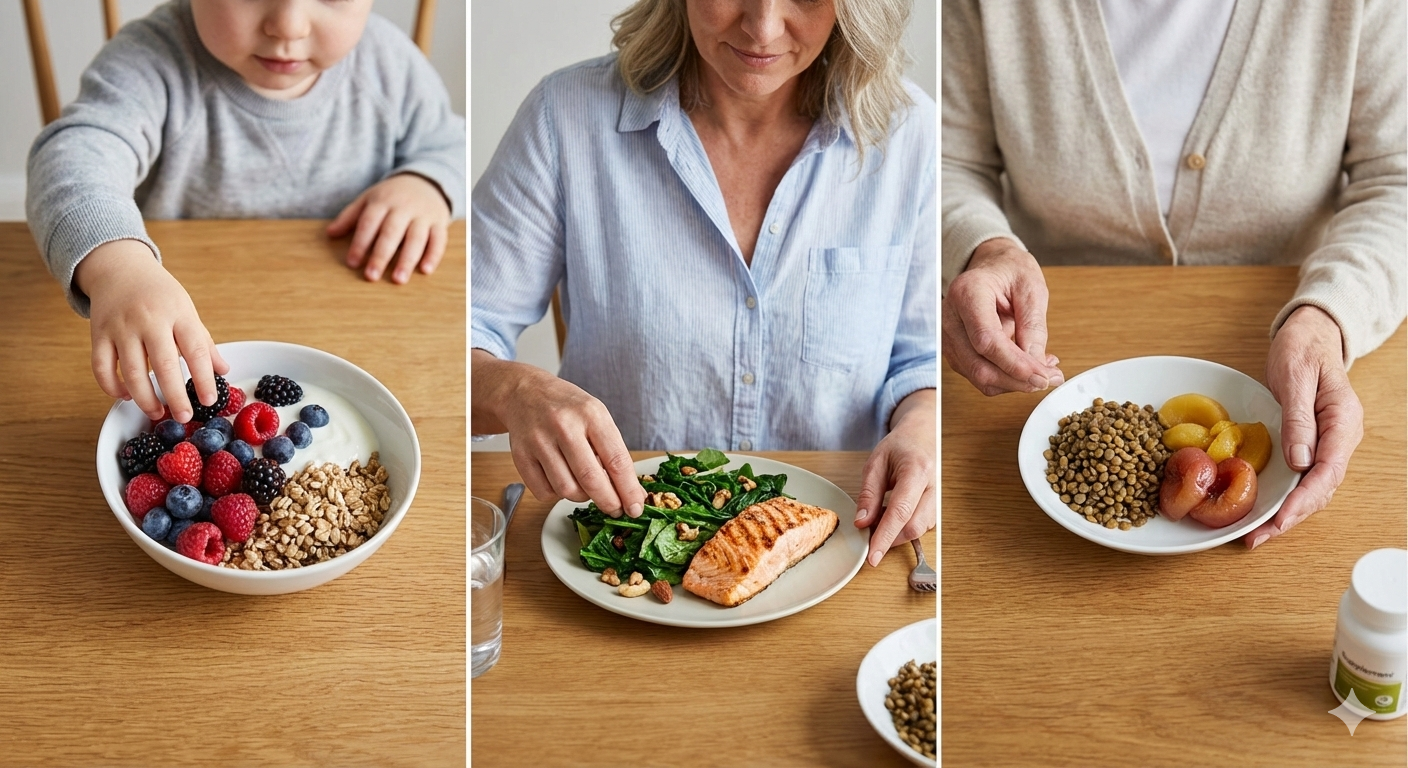

We all know eating well is important, but the “best” diet isn’t the same for everyone at every age. From building a body preserving it, our nutritional priorities shift throughout our lives. Understanding these changes can help you make smarter food choices to support your health at every stage.
Childhood (0-12 years): Building the Foundation
Early life is a period of rapid growth for the body and brain. The focus here is on nutrient – dense foods that provide the building blocks for development.
- Key Nutrients: Calcium and Vitamin D are crucial for building strong bones. Iron supports brain development and energy. A wide variety of vitamins from fruits and vegetables boosts immunity.
- Diet Focus: Whole foods are best. Think plenty of fruits, vegetables, whole grains, beans, lentils, and healthy fats from foods like nuts and seeds. Limit sugary snacks and ultra – processed foods, as early sugar exposure can impact long – term heart health.
Teens & Young Adulthood (13-30s): Establishing Habits
This stage finishes the work of childhood while setting the stage for lifelong health. Energy demands are high from growth, studying and active lifestyles.
- Key Nutrients: The need for calcium, vitamin D, and iron (especially for those who menstruate) remains high. Adequate protein and B vitamins support muscle growth and sustained energy.
- Diet Focus: A largely plant – based pattern rich in colorful produce, whole grains, and plant – based proteins (beans, lentils, tofu) is ideal. This supports physical health and emerging evidence suggests it can positively impact mental well – being. reducing risk of depression and anxiety.
Middle Age (40s-50s): Shifting to Protection and Maintenance
In mid – life, the goal shifts from growth to maintenance and prevention. For women, menopause brings specific changes that diet can help manage.
- Key Priorities: Protecting heart health and maintaining bone and muscle mass become critical. The loss of estrogen during menopause increases cardiovascular risk and accelerates bone density loss.
- Diet Focus: A Mediterranean – style diet is highly beneficial. Emphasize vegetables, fruits, whole grains, legumes, nuts, and healthy fats like olive oil. Increase intake of omega -3 fats (from oily fish) for heart health and slightly boost protein to combat natural muscle loss. Limit ultra – processed foods.
Later Life (60+): Preserving Strength and Function
As we age, calorie needs decrease, but nutrient needs remain high or even increase. The focus is on preserving muscle, bone strength, and overall function.
- Key Nutrients: Protein is essential to fight age – related muscle loss (sarcopenia). Calcium and Vitamin D remain vital for bone health. Fiber supports a healthy gut microbiome, which is linked to better nutrient absorption and overall health.
- Diet Focus: Prioritize nutrient – rich foods over calorie – dense ones. Ensure every meal includes a good source of quality protein (fish, poultry, beans, dairy). Eat a colorful variety of fruits and vegetables for fiber, vitamins, and polyphenols to nourish a healthy gut. Staying hydrated is also crucial.
In summary, there is no one – size – fits – all diet for life. By understanding how your body’s needs evolve – from building bones in youth to preserving muscle in older age – you can adapt your eating habits to support health and vitality through every decade. The consistent themes are choosing whole, minimally processed foods and adjusting specific priorities as you move through each life stage.

 By
By