
India is home to nearly 90 million adults living with diabetes or high blood sugar. With such a large population affected, everyday food choices matter more than ever. One common question that comes up in Indian kitchens is whether potatoes or sweet potatoes are better for blood sugar control. The answer is not as simple as picking one over the over. It depends on the variety, how you cook it, and what you eat it with.
Why This Comparison Matters
Potatoes are a staple in Indian meals. They are affordable, widely available, and loved by many. Sweet potatoes, often eaten roasted or as a snack, are also popular. But for those watching their blood sugar, knowing the difference between these two can help make better food choices without giving up taste or tradition.
Nutritional Profile: How They Stack Up
Let us look at what each vegetable offers per 100 grams, based on Indian dietary data.
Potato
- Carbohydrates: 17 g
- Protein: 2 g
- Fiber: 2 g
- Key vitamins: Vitamin C, B6
- Minerals: Potassium, magnesium, copper
- Glycemic Index (GI): 78 to 82 (high)
Sweet Potato
- Carbohydrates: 20 g
- Protein: 1.6 g
- Fiber: 3 g
- Key vitamins: Rich in Vitamin A, C, E
- Minerals: Potassium, manganese, iron
- Glycemic Index (GI): 44 to 61 (low to medium)
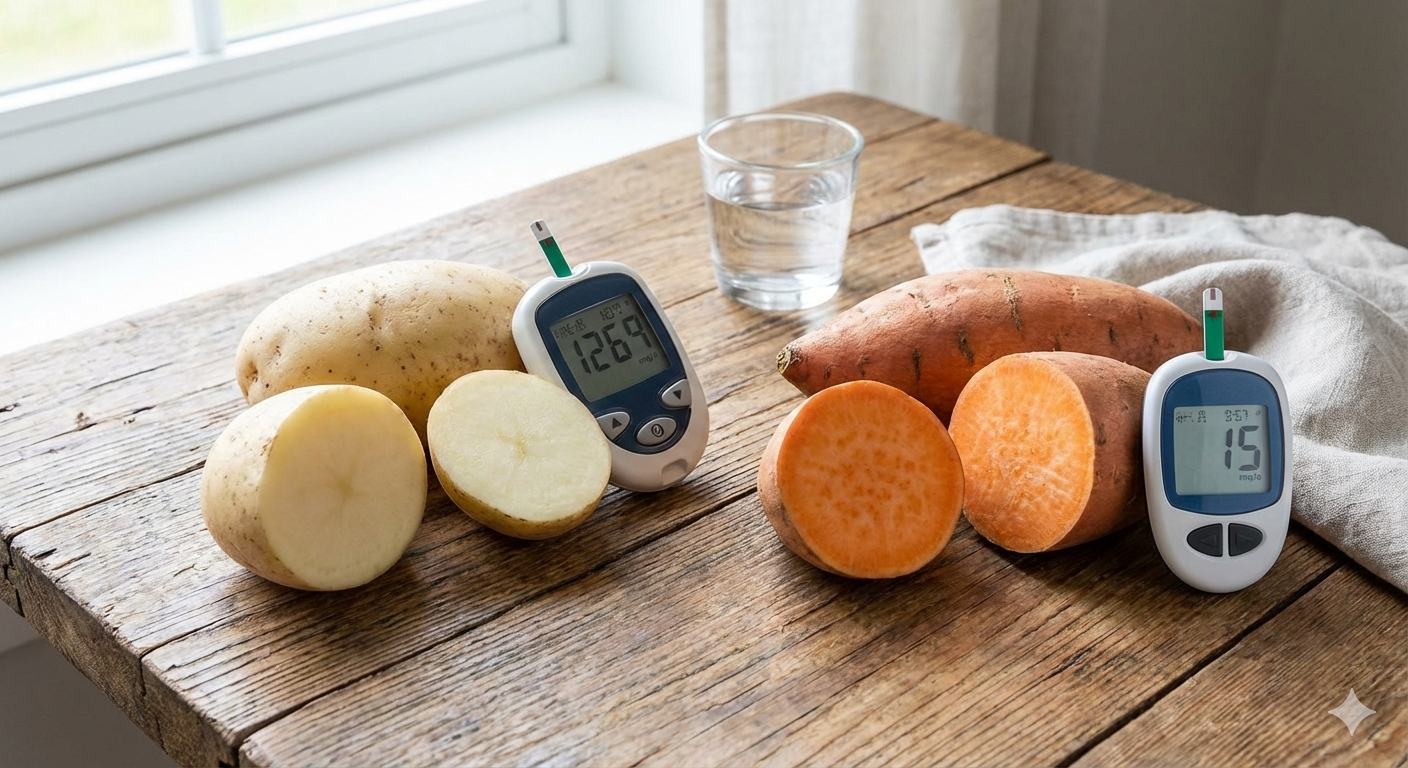
Sweet potatoes have slightly more fiber and a much lower glycemic index. This means they release sugar into the blood more slowly. Potatoes, especially when boiled or fried, cause faster spikes.
Glycemic Index: What the Numbers Mean
The glycemic index tells you how quickly a food raises blood sugar.
- High GI (70 and above): Causes rapid spikes. Regular potatoes fall here.
- Medium GI (56 to 69): Moderate effect.
- Low GI (55 and below): Slow release. Sweet potatoes fall here.
Boiled potatoes have a GI between 78 and 82. Frying makes it even higher. However, when cool boiled potatoes, the GI drops slightly to around 65 to 70. This happens because cooling changes the starch into a form that is harder to digest.
Sweet potatoes have a GI ranging from 44 to 61 depending on how they are cooked. Boiling or roasting with skin keeps the GI lower.
Not All Potatoes Are the Same
A common belief is that all potatoes are bad for blood sugar. Research from India’s Central Potato Research Institute tells a different story. Scientists studied 46 Indian potato varieties and found that some, like Kufri Anand, Kufri Arun, and Kufri Neela, contain compounds that slow down carbohydrate breakdown. These varieties showed up to 52 percent glucosidase inhibitory activity, which means they can help reduce blood sugar spikes. This challenges the idea that all potatoes are harmful for diabetics.
Sweet Potatoes: A Medicinal Food
Sweet potatoes are often called a medicinal food in scientific literature. They are rich in bioactive compounds that help regulate blood sugar and improve insulin sensitivity. These include:
- Carotenoids: Plant pigments that support eye health and reduce inflammation.
- Anthocyanins: Found in purple sweet potatoes, these compounds have antioxidant and anti-diabetic properties.
- Phenolic acids: Natural plant compounds that protect cells from damage.
Studies show that sweet potatoes can help lower insulin resistance and stabilize blood sugar levels over time.
Cooking Method Changes Everything
How you prepare these vegetables makes a big differences.
Ways to Make Potatoes Healthier
- Boil them and let them cool before eating. This lowers the GI.
- Avoid deep frying. Fried potatoes cause the highest blood sugar spikes.
- Combine potatoes with dal, vegetables, or salad. This slows down digestion and sugar release.
- Eat them in small portions, not as the main bulk of your meal.
Ways to Make Sweet Potatoes Work for You
- Roast or steam them with the skin on. This preserves fiber and nutrients.
- Avoid adding too much sugar or jaggery to sweet potato dishes.
- Eat them as a mid – meal snack instead of fried foods or refined flour prooducts.
- Sprinkle chaat masala or lemon juice for flavor without spiking sugar.
Which One Should You Choose?
For blood sugar control, sweet potatoes are generally the better choice. They have more fiber, a lower glycemic index, and contain compounds that actively help regulate glucose levels.
However, this does not mean you must remove potatoes from your diet completely. Some Indian potato varieties are better than others. Eating potatoes in moderation, cooking them wisely, and pairing them with fiber-rich foods can make them safer for blood sugar.
The key is not elimination. It is informed choice.
Simple Tips for Daily Meals
- If you have diabetes or prediabetes, lean toward sweet potatoes more often.
- When eating potatoes, choose boiled and cooled versions over fried.
- Mix potatoes with green vegetables or lentils to balance the meal.
- Pay attention to portion size. A small serving is enough.
- Experiment with purple or colored potato varieties if available. They have more antioxidants.
Both potatoes and sweet potatoes can fit into a balanced diet. But when it comes to blood sugar control, sweet potatoes have a clear edge. They digest slowly, release sugar gradually, and come packed with protective plant compounds. Potatoes are not the enemy, but they require more caution and smarter preparation. In a country where diabetics affects millions, small changes in daily food choices can add up to meaningful health gains over time.


 By
By