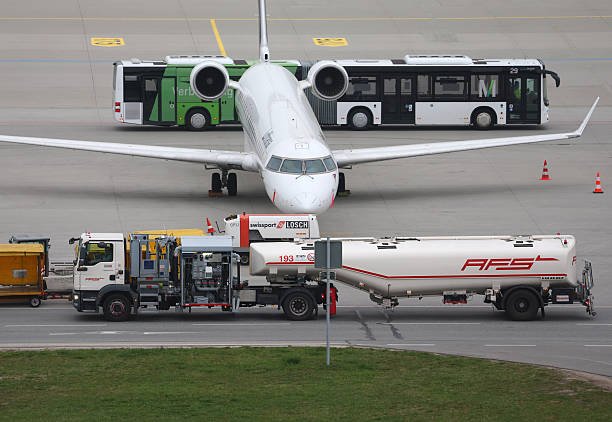

Europe has only about six weeks of jet fuel remaining, the head of the International Energy Agency has warned. The crisis stems from the effective closure of the Strait of Hormuz by Iran, a key route for fuel leaving the Gulf. If supplies remain blocked, flight cancellations across the continent could become a reality.
The Warning
IEA executive director Fatih Birol told the Associated Press that Europe could soon see major disruptions to air travel. In its monthly oil market report, the agency said exports from the Gulf region are the largest source of jet fuel for the global market. Even refineries in other major exporting countries like South Korea, India, and China depend heavily on crude oil imports from the Middle East. The crisis, the IEA said, “has thrown a proverbial wrench into the inner workings of the aviation fuel markets.”
How Long Will Supplies Last
The IEA warned that if Europe fails to replace at least half of its Middle Eastern imports, “physical shortages may emerge at select airports, resulting in flight cancellations and demand destruction.” If three-quarters of supplies could be replaced, the same situation might not arise until August. But for now, the outlook is grim. The benchmark European jet fuel price hit an all-time high of $1,838 per tonne at the start of April, compared to just $831 before the war began.
What Is Being Done
European countries are scrambling to replace Gulf supplies with imports from elsewhere, mainly the United States and Nigeria. The IEA noted a rapid acceleration in US jet fuel exports in recent weeks. However, even if all those shipments were destined for Europe, they would replace only a little over half of the lost supplies.
A spokesperson for the UK government said it is working with fuel suppliers and airlines to “ensure people keep moving and businesses are supported.” Airlines UK, which represents the industry, said it is not seeing disruption yet but is discussing “crucial measures” to support aviation in the event of a fuel crisis.
Airlines Feeling the Pressure
EasyJet reported an additional £25 million in fuel costs for March alone, despite having secured most of its fuel at fixed prices before costs rose. KLM announced it will cancel 160 flights in Europe over the coming month due to rising fuel costs, though it said it is not experiencing a shortage.
The EU has said there is “no evidence of fuel shortages” yet but acknowledged that supply issues could arise in the near future. Industry groups are calling on the European Commission to clarify passenger compensation rules so that fuel shortages or airspace closures are treated as “extraordinary circumstances,” which would relieve airlines from paying significant compensation for cancellations.
Summer Travel at Risk
Amaar Khan, head of European jet fuel pricing at Argus Media, believes that even if Gulf supplies resume soon, shortages could still occur before the summer travel peak. “It’s not a certainty, but it’s looking more and more likely that there will be a shortage of some extent in some areas of Europe,” he said. Airports like London Heathrow would likely be prioritized over smaller hubs. “Even if supply does come on, it will take five to six weeks,” he added.
Europe is facing its most serious jet fuel crisis in decades. With the Strait of Hormuz closed and no quick resolution in sight, airlines are bracing for higher costs, possible cancellations, and a summer of uncertainty. For now, the clock is ticking.


 By
By