
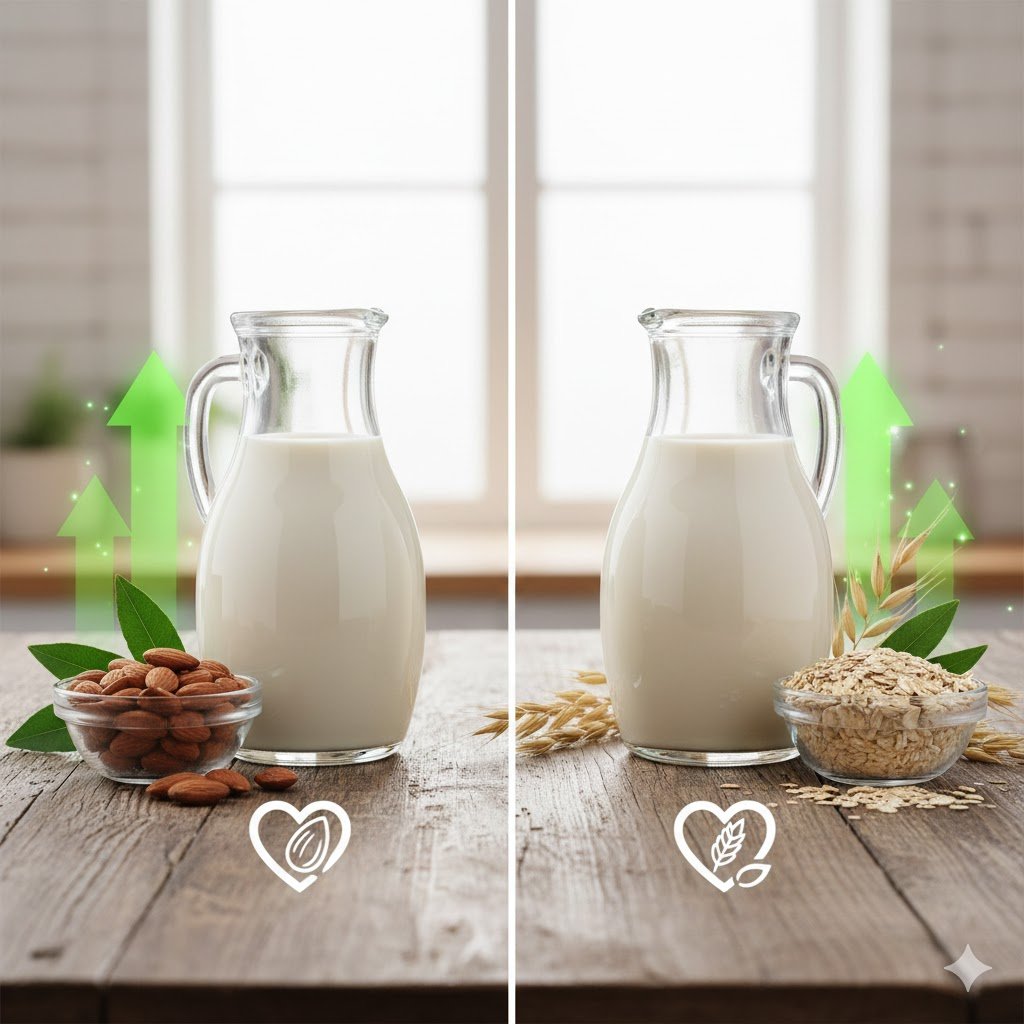

Plant – based milks are becoming increasingly popular. More popular are choosing almond milk and oat milk over traditional diary. One major reason is heart health. With rising rates of heart disease, many are looking for small daily changes that can make a big difference. Switching your milk might be one of them. But which plant – based milk is actually better for your heart? The answer depends on your health goals, dietary needs, and lifestyle.
How Almond Milk and Oat Milk Are Made
Understanding how these milks are made helps explain their nutritional differences.
Almond milk is made by soaking almonds in water overnight, removing the skins, grinding them into a fine paste, mixing with water, and straining out the solids.
Oat milk follows a similar process. Rolled or steel – cut oats are soaked, blended with water, and strained. No skins to remove, which makes oat milk easier to prepare at home.
Both are dairy – free and lactose – free. But their nutrient profiles are quite different.
Nutritional Comparison: Almond Milk vs Oat Milk
Here is how unsweetened, fortified versions of each milk compare per 100 milimeters.
Almond Milk
- Calories: 30 to 40
- Protein: 1 gram
- Fat: 2 to 3 grams (heart-healthy unsaturated fats)
- Carbohydrates: 1 to 2 grams
- Fiber: Trace amounts
- Vitamin E: High (6 mg)
- Calcium: 120 mg (fortified)
- Added Sugar: 0 grams (unsweetened version)
Oat Milk
- Calories: 40 to 50
- Protein: 1 to 2 grams
- Fat: 1.5 to 2 grams (mostly unsaturated)
- Carbohydrates: 6 to 8 grams
- Fiber: 1 to 2 grams (beta-glucan)
- Vitamin E: Low
- Calcium: 120 mg (fortified)
- Added Sugar: 0 grams (unsweetened version)
Almond milk is lower in calories and carbohydrates. Oat milk has more fiber and a creamier texture.
How Almond Milk Supports Heart Health
Almond milk offers several heart – friendly benefits.
Rich in Vitamin E
Vitamin E is a powerful antioxidant. It helps protect cells from oxidative stress, which can damage blood vessels and contribute to heart disease. Almond milk provides significantly more vitamin E than oat milk.
Unsaturated Fats
The fats in almonds are mostly monounsaturated. These are considered heart-healthy fats. They can help improve cholesterol levels when they replace saturated fats in your diet.
Low in Carbohydrates
For those watching their blood sugar, almond milk is a better choice. Its low carbohydrate content means it does not cause spikes in blood glucose. Stable blood sugar is important for long – term heart health.
How Oat Milk Supports Heart Health
Oat milk has its own set of cardiovascular advantages.
Beta-Glucan Fiber
Oats contains a unique type of soluble fiber called beta – glucan. This fiber has been extensively studied. It works by binding to bile acids in your gut, which forces your liver to use up more cholesterol to produce new bile. This process lowers LDL, or “bad” cholesterol, in your blood.
Cholesterol Reduction
Multiple studies confirm that regular consumption of beta – glucan can significantly reduce total cholesterol and LDL cholesterol. This directly lowers the risk of coronary heart disease.
Digestive Benefits
The fiber in oat milk also supports gut health. A healthy gut microbiome is increasingly linked to better cardiovascular outcomes.
Which One Should You Choose?
There is no single right answer. The best choice depends on your individual health priorities.
Choose Almond Milk If:
- You are watching your calorie intake for weight management.
- You need to limit carbohydrates due to diabetes or prediabetes.
- You want to increase your antioxidant intake.
- You prefer a thinner, lighter milk for coffee or cereal.
Choose Oat Milk If:
- You have high cholesterol and want to lower it naturally.
- You need more fiber in your diet.
- You prefer a creamier texture that mimics dairy milk.
- You want a nut-free, gluten-free, option (check labels for certified gluten – free)
What About Allergies and Sensitivities?
Almond milk is not suitable for people with tree nut allergies. Oat milk may contain gluten unless specifically labeled gluten – free. Cross – contamination during processing is common. Always read labels carefully.
The Sugar Trap: Why Unsweetened Is Best
Many commercial plant – based milks contain added sugars. Flavored versions can have as much sugar as soda. This completely cancels out any heart health benefits. Always choose unsweetened varieties. Your heart will thank you.
Sustainability: Oat Milk Has the Edge
For those concerned about environmental impact, oat milk is the clear winner. Almond cultivation requires massive amounts of water, much of it in drought – prone regions like California. Oats have a much lower water footprint and produce fewer greenhouse gas emissions. If sustainability matters to you, oat milk is the greener choice.
Both Can Be Heart-Healthy
Almond milk and oat milk both support heart health, just in different ways. Almond milk excels at providing antioxidants and keeping calories and carbs low. Oat milk shines when it comes to actively lowering cholesterol through its beta – gluten fiber.
The best approach? You do not have to choose just one. Many people keep both in their refrigerator. Use almond milk when you want something light and low-calorie. Use oat milk when you want a creamy texture and an extra dose of cholesterol – lowering fiber.
What matters most is choosing unsweetened, fortified versions and using them as part of an overall heart – healthy diet. No single food determines your heart health. But small, consistent choices add up over time. Switching to plant – based milk is one of those simple swaps that can make a real difference.


 By
By