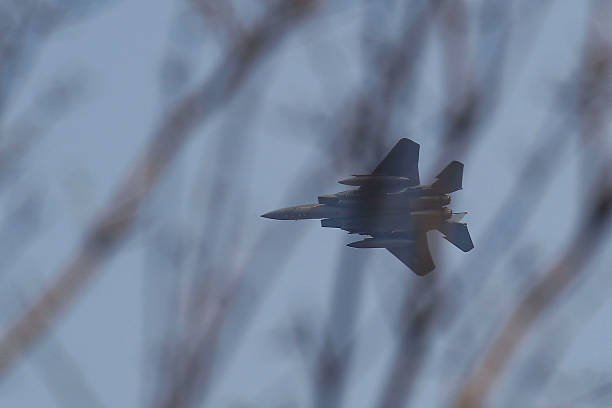

A brief but intense war of words erupted over the weekend after Iranian state media claimed its air defense forces had shot down a US F-15 fighter jet near the strategic Strait of Hormuz. The United States quickly stepped in to set the record straight, saying no American aircraft have been lost in the conflict.
What Iran Claimed
The claim first appeared in the Tehran Times, which reported that Iranian forces intercepted a US F-15 over Iran’s southern coast and brought it down with a surface-to-air missile near Hormuz Island. The report described it as a successful engagement against a hostile intrusion. A video also surfaced on social media, purportedly showing the moment of interception.
What the US Says
US Central Command, or CENTCOM, dismissed the reports. In a statement, the military command said no American fighter aircraft have been shot down by Iran in more than 8,000 combat sorties conducted during Operation Epic Fury. The message was clear: the F-15 claim was false.
The F-35 Incident Was Real
The denial came just days after a separate incident involving a different US aircraft. On Friday, an F-35 stealth fighter was forced to make an emergency landing at a US base in the Middle East after being hit over Iranian airspace during a mission. Iran’s Revolutionary Guards claimed the stealth fighter was “struck and seriously damaged” by its forces. CNN reported that the pilot survived the incident, and an investigation is underway to determine exactly what caused the emergency landing.
That event marked the first known instance of Iran successfully striking one of the US military’s most advanced and expensive aircraft during the current conflict. It was a significant moment in a war that has already seen strikes on energy infrastructure, shipping disruptions, and targeted killings on both sides.
The Bigger Picture
Tehran also claimed it had intercepted and downed more than 125 US and Israeli drones, saying the success reflects major upgrades in its integrated air defense network. Those claims have not been independently verified, and the US has not commented on them.
The conflicting narratives highlight the fog of war that now surrounds the conflict in the Middle East. Both sides are using propaganda to shape public perception, both at home and abroad. For Iran, claiming to have downed a US fighter jet bolsters morale and projects strength. For the United States, denying the claim maintains its image of military invincibility.
What is clear is that the skies over the Persian Gulf have become a dangerous battlefield. The F-35 emergency landing proved that Iran can hit advanced US aircraft, even if the F-15 claim turned out to be false. As the war continues, both sides will keep fighting not just with missiles and drones, but with words designed to influence how the world sees the conflict.

 By
By