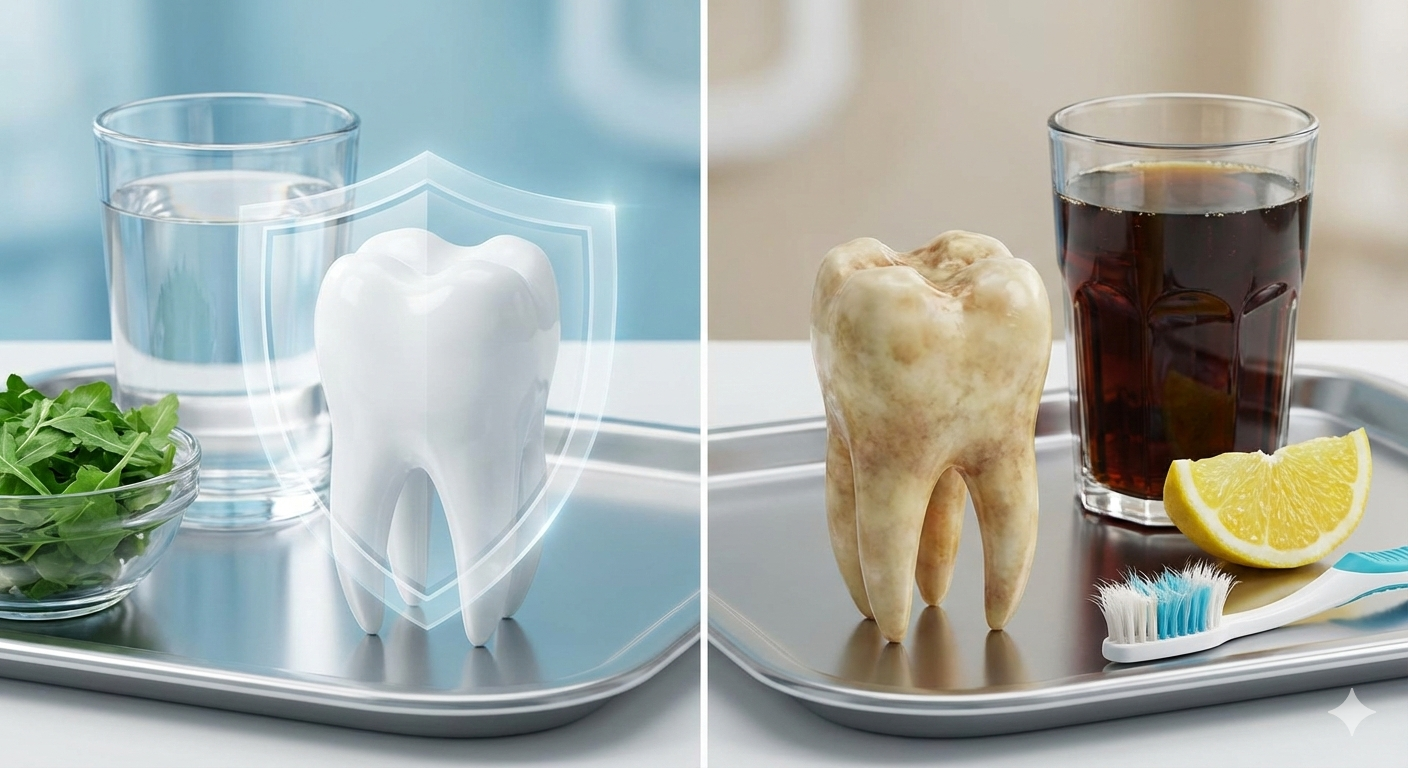

When you think about your teeth, you probably think about cavities, whitening, or straightening. Rarely do we think about the thin outer layer that protects everything underneath. Yet this year, called enamel, is the hardest substance in the human body. It is even stronger than bone. It protects your teeth from heat, cold, pressure and bacteria every single day. But here is the catch: enamel does not grow back. Once it is gone, it is gone forever. That is why understanding what damages it matters more than you think.
What Is Tooth Enamel and Why Is It So Important?
Enamel is the thin, hard outer shell that covers the visible part of your tooth. It is translucent, not while, which is why the color of your teeth actually comes from the dentin underneath.
Think of enamel as armor. Every time you bite into something hard, sip hot coffee, or drink ice water, enamel absorbs the shock. Without it, your teeth would be painfully sensitive and highly vulnerable to decay.
Unlike your skin or bones, enamel is not living tissue. Your body cannot repair it or grow new enamel. Once it wears away, that protection is permanently lost. This is why small daily habits matter far more than occasional trips to the dentist.
11 Reasons Your Enamel Wears Away
Enamel erosion is not caused by one single thing. It is a combination of habits, health conditions, and even how your teeth fit together.
1. Acid, Not Sugar, Is the Real Enemy
Many people believe sugar directly damages teeth. In reality, sugar feeds bacteria in your mouth. Those bacteria produce acid. It is the acid that attacks and softens your enamel. This process is called demineralization. Your saliva tries to fix it by depositing minerals back into your teeth, a process called remineralization. But when acid attacks happen too often, your saliva cannot keep up.
2. Constant Snacking
Every time you eat or drink anything other than water, your mouth becomes acidic for about 20 to 30 minutes. If you are constantly sipping or snacking throughout the day, your enamel never gets a break. It stays under attack for hours.
3. Sodas and Carbonated Drinks
Soft drinks, even diet and sugar – free versions, contain high levels of acid. They do not need sugar to damage your teeth. Energy drinks, sports drinks, packaged iced teas, and many fruit juices are just as harmful. Even drinks marketed as healthy can quietly erode your enamel over time.
4. Lemon Water and Citrus Habits
A warm glass of lemon water first things in the morning feels like a healthy habit. But citrus fruits are highly acidic. Drinking lemon water daily without precautions can softens and wear down your enamel. If you enjoy citrus drinks, drinking through a straw and rinsing your mouth with plain water afterward can help reduce the damage.
5. Brushing Too Soon After Eating
It seems responsible to brush your teeth right after a meal. But if you have just eaten something acidic, your enamel is temporarily softened. Brushing immediately can scrub that softened layer away. Dentists recommend waiting at least 30 minutes before brushing after consuming acidic foods or drinks.
6. Acid Reflux and GERD
Acid does not only come from food. Stomach acid is far stronger than anything you eat or drink. If you have acid reflux or GERD, stomach acid can wash over your teeth, especially the back of your upper front teeth. This repeated exposure causes significant erosion over time. If you notice enamel loss along with heartburn or regurgitation, it is important to address the root cause.
7. Dry Mouth
Saliva is your mouth’s natural defense system. It neutralizes acid and helps remineralize enamel. When your mouth is dry, that protection disappears. Dry mouth can be caused by medications, diabetes, dehydration, stress, or simply getting older. Drinking more water and addressing the underlying cause can make a real difference.
8. Aggressive Brushing
Brushing harder does not mean cleaner teeth. In fact, brushing with too much force or using a hard – bristled brush can physically scrape away enamel, especially near the hum line. Over time, this creates grooves, sensitivity, and permanent damage. A soft – bristled brush and gentle circular motions are all your teeth actually need.
9. Deep Bite
How your teeth fit together matters. Some people have what is called a deep bite, where the upper front teeth overlap the lower front teeth excessively. This causes abnormal contact and extra pressure on enamel. Over time, teeth can become flattened, shortened, and sensitive. Orthodontic treatment in these cases is not just about appearance. It protects your teeth from wearing down.
10. Misaligned or Crowded Teeth
When teeth are cooked or crowded, chewing forces are not evenly distributed. Some teeth end up bearing much more weight than they were designed to handle. This leads to uneven wear, tiny cracks, and premature enamel loss. Straightening teeth is not cosmetic. It helps your teeth last longer.
11. Teeth Grinding
Many people grind their teeth at night without realizing it. This condition is called bruxism. The constant pressure and friction slowly grind away enamel. It can also chipping, cracking, and jaw pain. If you wake up with headaches or a sore jaw, you may be grinding your teeth. A custom night guard can protect your enamel while you sleep.
What You Can Do to Protect Your Enamel
Because enamel cannot regenerate, protection is your only option.
- Rinse your mouth with plain water after acidic foods or drinks.
- Wait at least 30 minutes before brushing after meals.
- Use a soft – bristled toothbrush and gentle pressure.
- Drink acidic beverages through a straw to minimize contact with teeth.
- Stay hydrated to maintain healthy saliva flow.
- Address acid reflux, dry mouth, and teeth grinding with professional help.
- Consider orthodontic treatment if misalignment is causing uneven wear.
Tooth enamel is remarkably strong, but it is not invincible. It protects your teeth every single day, yet it never get a chance to heal itself. Once it is gone, no treatment can bring it back. The good news is that enamel loss is largely preventable. Most damage comes from daily habits that can be changed. Acid attacks, aggressive brushing, grinding, misalignment, and even healthy habits like lemon water can quietly wear away your armor. By understanding what harms your enamel and making small adjustments, you can keep your teeth strong, protected, and healthy for a lifetime.


 By
By