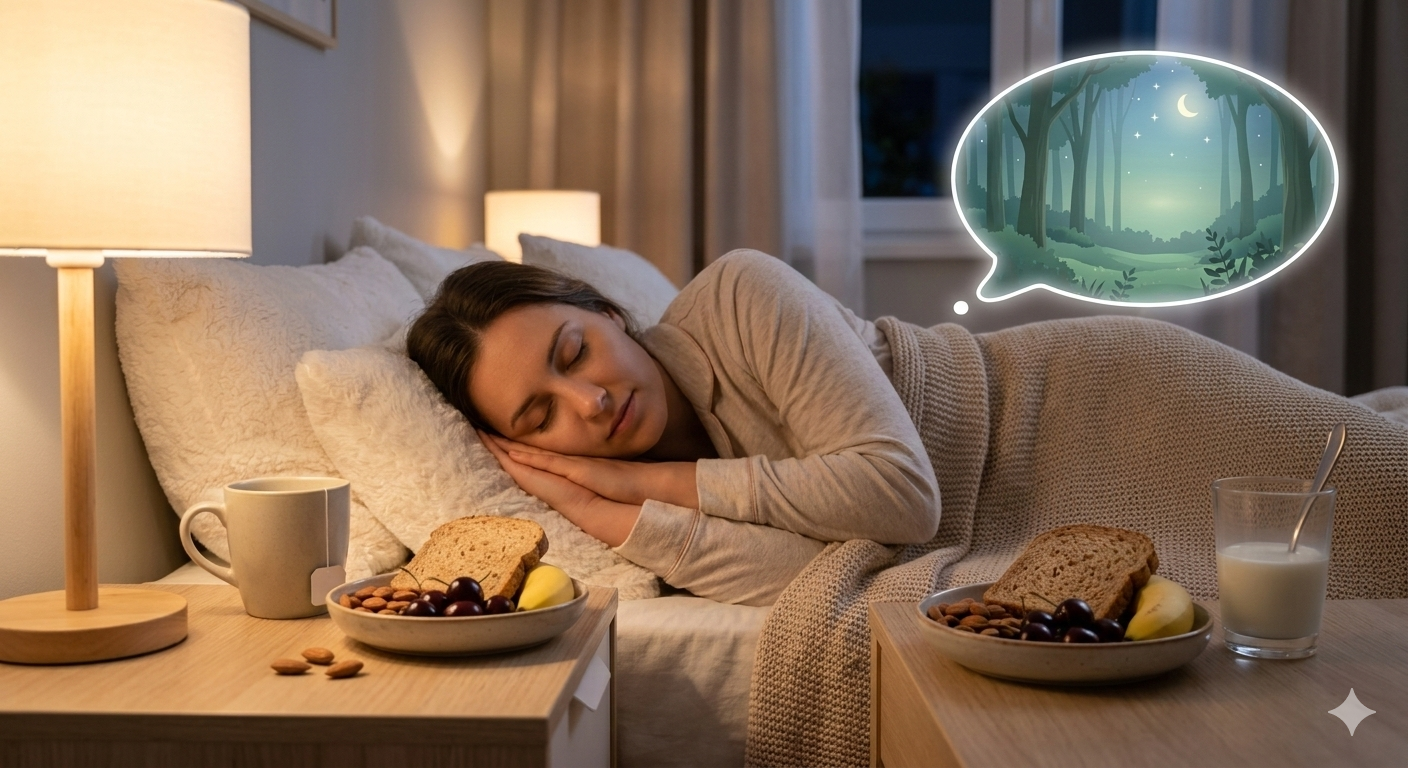

Millions of people struggle to get a good night’s sleep. Stress, screens, and busy lives make it hard to wind down. Now a new kind of product promises to help. They are called sleep snacks. These are treats like chocolates, gummies, and bars packed with ingredients said to help you relax and sleep better. But do they really work? Here is what you need to know.
The Rise of Sleep Snacks
One company leading this trend is Alice Mushrooms. Their product called Nightcap is a chocolate bar made with ingredients meant to improve sleep. It contains reishi mushrooms and chamomile, both known for their calming effects. It also has magnesium and zinc, which are said to help your body produce more melatonin. Melatonin is the hormone that makes you feel sleepy. The chocolate also includes L-theanine, an amino acid found in green tea that may help relax your body.
Charlotte Cruze co-founded Alice Mushrooms. She says they spent a long time developing this product. “Sleep is so tough. There’s a million different reasons that people can struggle with sleep,” she explains. They worked with homeopathic doctors, researchers, and product experts to target every part of the sleep cycle.
The idea is simple. Eating a chocolate feels like a treat. Swallowing a pill feels like medicine. People are more likely to enjoy a snack than take a capsule.
How Big Is the Sleep Snack Market
Many people need help sleeping. A survey found that 47 percent of Americans take some kind of sleep aid. Natural supplements like melatonin are the most popular choice. In the UK, natural remedies are the fastest growing part of the sleep aid market.
Both the US and UK rank low for sleep quality. The IKEA 2025 Sleep Report placed both countries in the bottom 10 for good sleep scores. People are looking for solutions.
Other companies are now joining the market. Goodnite makes dark chocolate sleep bites with L-theanine and melatonin. Lagoon offers Night Bites with L-theanine and magnesium. Good Day Chocolate has a Calm range with magnesium, L-theanine, and chamomile. Reishi mushrooms are showing up in chocolates, gummies, and drinks everywhere.
What Does the Science Say
Some ingredients in these products have real science behind them. Magnesium and melatonin have proven long-term benefits for sleep. But for other ingredients, the evidence is weaker.
Chamomile may help with sleep, but any positive effects seem to be short-term. Placebo effects are common. People feel better because they expect to feel better.
Reishi mushrooms have been used in Asian medicine for thousands of years. But modern studies are too small and too short to prove they work for sleep.
L-theanine is more complicated. It has been used in Japan since the 1960s. The US approved it for food in 2005. In Europe and the UK, it is only allowed if naturally extracted from green tea. Synthetic versions are banned.
Research on L-theanine shows modest sleep benefits at best. The doses tested in studies are often higher than what you get in a snack bar.
What Experts Say
Melanie Stearns studies sleep at the University of South Florida. She says the amounts of L-theanine in foods are often too low to have a real effect. “The sleep benefits of L‑theanine when consumed in products like chocolate or snack bars are not well studied, and their effects should not be expected to be dramatic,” she warns.
Lina Begdache studies food and mood at Binghamton University. She worries about “dose stacking.” People may eat several products with the same active ingredients without realizing it. Long-term effects of high consumption are not yet known. She advises moderation and clear labels.
Sleep counselor Kat Lederle has other concerns. Different ingredients work at different times. Melatonin should be taken two hours before bed. Yet some products claim effects in 15 to 45 minutes. She also questions how ingredients interact with fat, sugar, and protein in a food product. More research is needed on timing, dosage, and effects on different groups.
The Biohacking Trend
Amir Mousavi is a food consultant who helps create new products. He says the demand for sleep snacks comes from “biohacking.” That is the trend of using science to improve physical and mental performance.
Mousavi himself takes many supplements daily. He uses creatine for muscles, lion’s mane for focus, ashwagandha for stress, and reishi for relaxation. During a stressful period last year, he tried a sleep aid with L-theanine. He also uses a high-tech bed cover that adjusts temperature to help him sleep better.
“People are very happy to experiment, even with just early stage scientific or proprietary evidence,” he says.
A Word of Caution
Lederle worries that sleep snacks might distract people from finding the real cause of their sleep problems. Cruze at Alice Mushrooms agrees. “You could take four of our Nightcap chocolates, but if you’re staring at your phone and scrolling TikTok late at night, there’s no point,” she says.
Sleep snacks are a growing trend. They offer a tasty way to address a common problem. Some ingredients have real science behind them. Others need more study. For now, these treats may help some people relax. But they are not magic. Good sleep still depends on good habits. Phones off. Lights dim. A regular schedule. And maybe, just maybe, a piece of chocolate before bed.

 By
By