
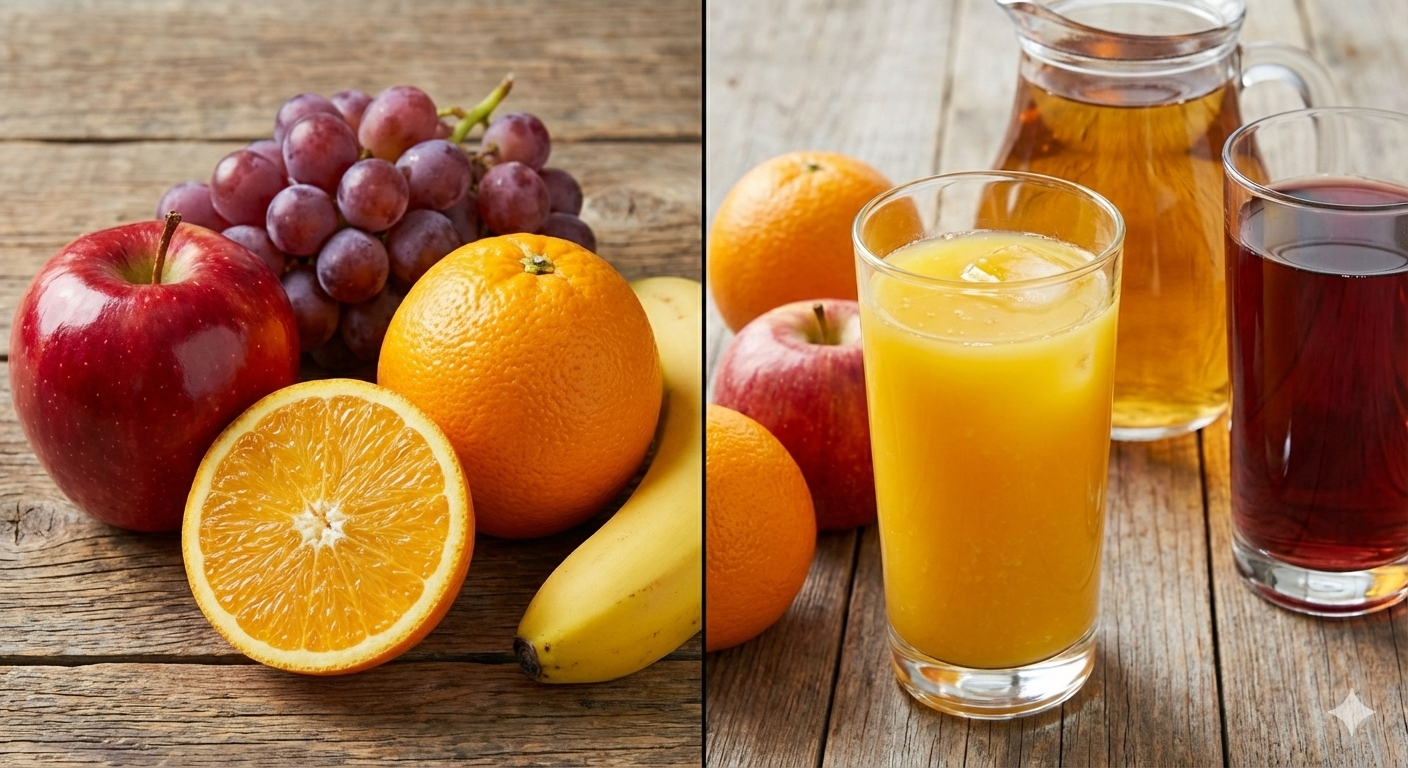

For people managing diabetes, the natural sugars in fruit can be confusing. Is fruit a friend or foe? The answer often depends not on the fruit itself, but on how you eat it. When it comes to keeping blood sugar stable, whole fruit is almost always the better choice than fruit juice. Here’s a simple breakdown of why.
Why Whole Fruit is the Better Choice
The Power of Fiber
The biggest difference between fruit and juice is fiber. When you eat a whole apple or a bowl of berries, the natural fiber in the skin and pulp creates a “slow – release” system for the sugars. This fiber slows down digestion, which prevents a rapid spike in your blood sugar. The sugar enters your bloodstream gradually, giving your body time to manage it effectively.
Feeling Full and Managing Portions
Eating whole fruit helps with portion control. The act of chewing and the fiber content make you feel full and satisfied. You’re less likely to overeat because one or two pieces of fruit is usually enough. This natural fullness makes it easier to manage your overall carbohydrate intake for the day.
Why Fruit Juice is Problematic
Missing Fiber, Fast Sugar
Juicing a fruit strips away almost all of its beneficial fiber. What’s left is a concentrated dose of the fruit’s natural sugars and water. without fiber to slow it down, this sugar is absorbed into your bloodstream very quickly. This can cause a sharp and unwanted rise in blood glucose levels, which is what people with diabetes try to avoid.
Easy to Overconsume
It’s very easy to drink the sugar of several pieces of fruit in just a few seconds. For example, one small glass of orange juice might contain the sugar from 3-4 oranges. You would likely feel very full after eating that many oranges, but you can drink the juice in moments without the same feeling of fullness. This makes it easy to consume a large amount of sugar and calories without realizing it.
Making Smart Fruit Choices
The goal is not to avoid fruit, but to enjoy it in the smartest way. Here are some easy tips:
Always Choose Whole: Make an apple, a pear, a handful of berries, or a citrus fruit your go-to snack.
Pair with Protein or Fat: For an even more balanced snack, pair your fruit with a handful of nuts, a spoonful of nut butter, or a slice of cheese. This further slows sugar absorption.
Save Juice for Emergencies: Fruit juice can be useful for quickly raising blood sugar during a hypoglycemic (low blood sugar) episode. However, for everyday drinking, it’s best to avoid it.
In summary, for managing diabetes, whole fruit is a healthy, fiber – rich choice that support stable blood sugar. Fruit juice, by removing that crucial fiber, acts more like a sugary drink and can disrupt blood sugar control. Enjoy the wide variety of delicious whole fruits available – your body will thank you for it.


 By
By