
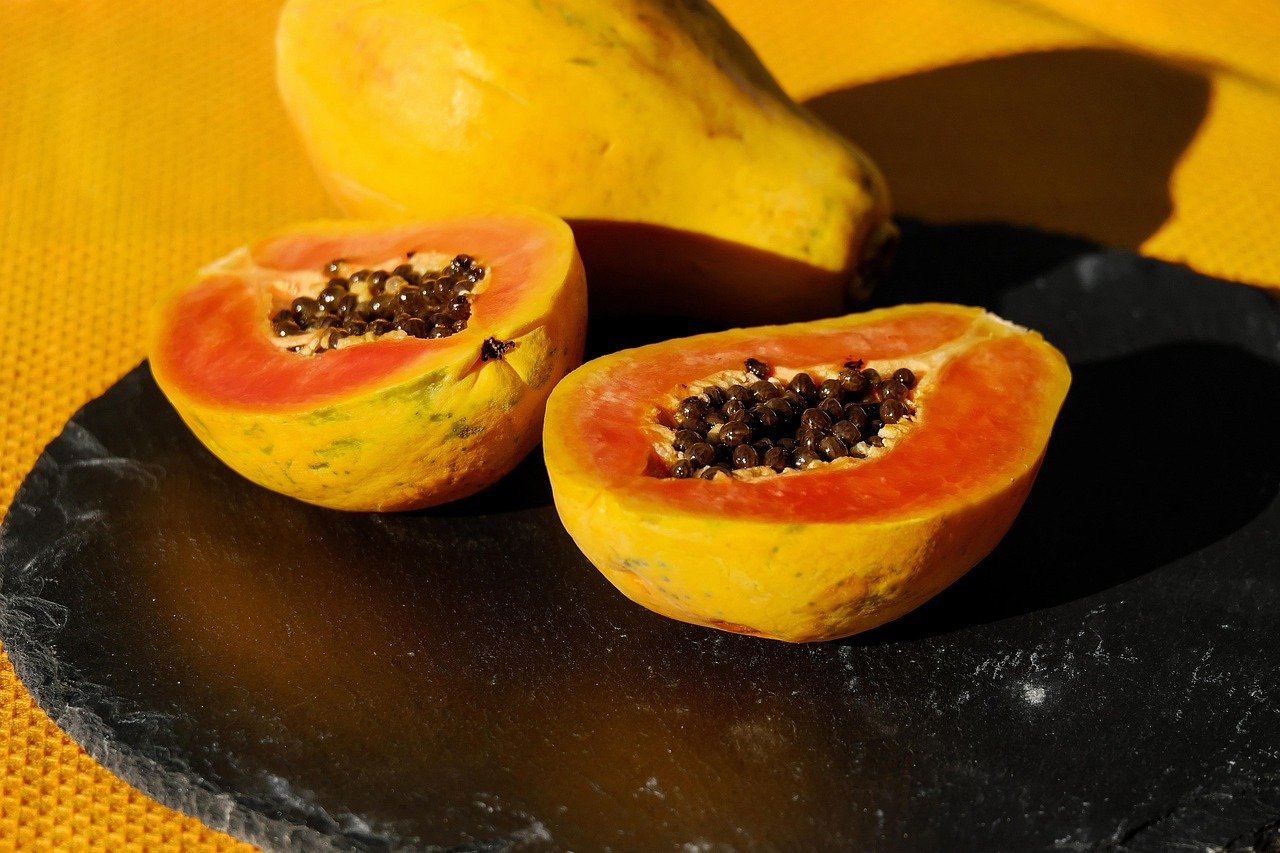

Struggling with late-night cravings, digestion issues, or managing weight? Papaya might be the fruit you need. This tropical fruit is light, refreshing, and packed with nutrients that can support digestion, improve sleep, and even help with weight loss. Eating papaya at night can make you feel lighter, reduce bloating, and keep your body nourished without extra calories.
Daily Health Benefits Of Papaya
Papaya is not just a sweet fruit but also a natural source of powerful nutrients. Adding a bowl of papaya to your diet every day can:
- strengthen immunity with vitamin C
- support healthy skin with antioxidants and vitamins A and C
- help regulate blood pressure with potassium
- protect eye health with vitamin A and antioxidants
- reduce inflammation with natural anti-inflammatory compounds
These everyday benefits make papaya a superfruit for overall wellness.
Nutritional Value Of Papaya
According to the USDA, 100 g of raw papaya contains:
- 43 kcal (low calorie and light)
- 11 g carbohydrates (natural energy)
- 1.7 g fibre (supports digestion)
- 0.5 g protein (body repair)
- 61 mg vitamin C (boosts immunity)
- 950 IU vitamin A (supports vision and skin)
- 182 mg potassium (balances blood pressure)
- 88% water content (hydration)
This makes papaya light, filling, hydrating, and nutrient-rich, which is why it is often recommended at night.
How Papaya At Night Helps Digestion And Weight Loss
Papaya is rich in papain, a natural enzyme that breaks down protein and supports digestion. When eaten at night, papaya acts as a Gangle digestive aid, especially after a heavy dinner. Its fiber helps prevent constipation and supports smooth bowel movements.
Papaya is also a weight-loss-friendly fruit. A small papaya of 152g contains only 68 calories. With high fiber and water content, it reduces bloating, detoxifies the body, and keeps you full for longer. For late-night sweet cravings, papaya is a healthy alternative to desserts.
Best Way To Eat Papaya At Night
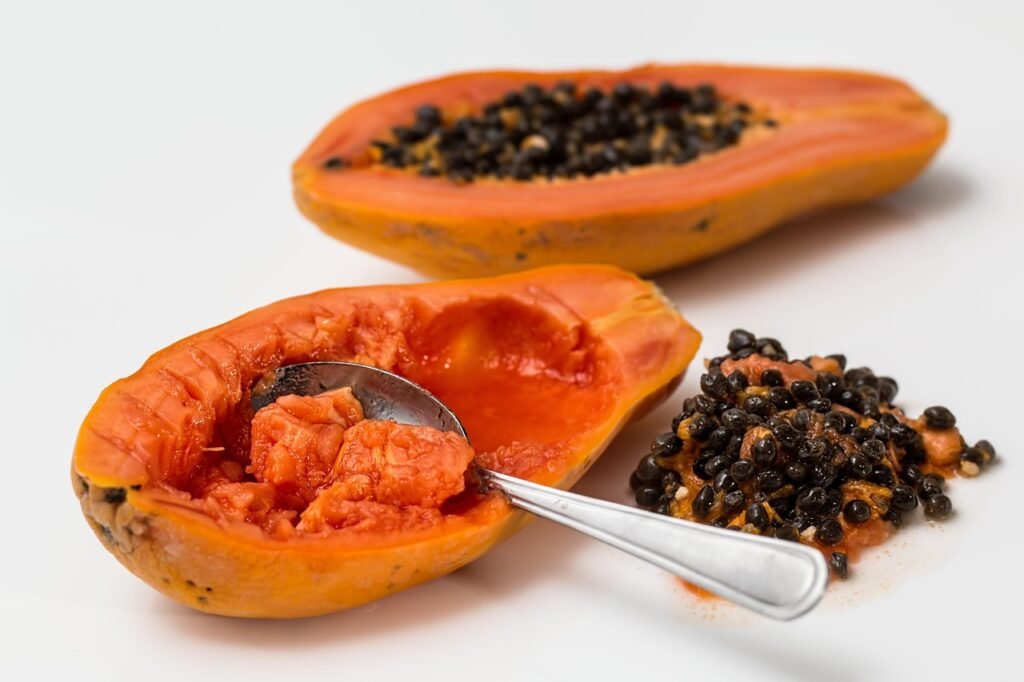
- Have 1 small bowl (about 1 cup) of fresh papaya 30-60 minutes after dinner
- Avoid adding sugar, cream or milk
- Pair with soaked nuts like almonds or walnuts for extra nutrition
- Do not eat immediately after meals; leave a gap for better digestion
Things To Avoid With Papaya At Night
- Do not overeat papaya as it may cause bloating in sensitive stomachs
- Avoid mixing papaya with milk since it can be hard to digest
- People with IBS or papaya allergy should avoid it
- Eat in moderation and at the right time for best results
Papaya In Ayurveda And Traditional Remedies
Papaya has been valued in Ayurveda for centuries as a natural digestive aid. Ripe papaya balances Pitta dosha, supporting digestion and metabolism. Papaya pulp is often used in home remedies for skin health, while papaya seeds are known for their role in gut health.
Papaya Vs Other Night-Time Fruits
Compared to other fruits, papaya is lighter and easier on the stomach. Bananas are nutritious but heavier, apples provide fiber but may cause gas, and kiwi helps with sleep but lacks papain. Papaya stands out as a digestion-friendly, low-calorie, sweet and satisfying option for night-time snacking.


 By
By