
Recent news of Nipah virus outbreaks understandably causes concern, especially after living through COVID-19. However, a crucial fact provides significant relief; Nipah virus is very different from the coronavirus. While Nipah is a serious disease, its fundamental biology makes a global pandemic unlikely. The real lesson is to understand what makes a disease a pandemic threat. Let’s explore why Nipah virus differs from COVID- 19 and which other illnesses pose a more credible global risk.
Nipah Virus: A Lethal but Contained Threat
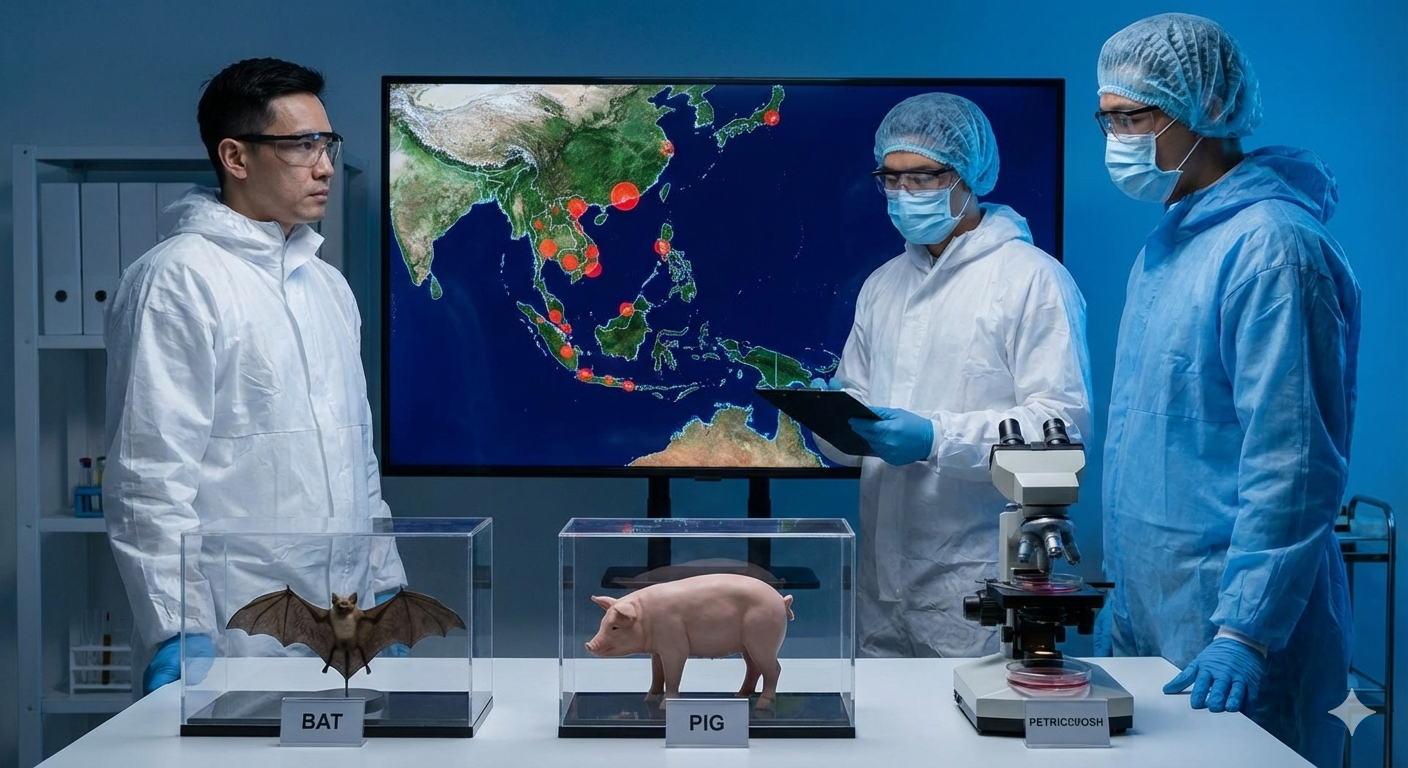
The Nipah virus is a classic zoonotic disease, meaning it spreads from animals to humans. Its primary source is fruit bats, with transmission occurring through direct contact with infected animals or their bodily fluids, like raw date palm sap. While human – to – human spread is possible, it requires very close contact with an infected person’s secretions. This is a key limiting factor.
Unlike COVID – 19, which spreads efficiently through the air via tiny respiratory droplets, Nipah does not spread easily through casual contact or from people without symptoms. Its transmission requires a specific, close – proximity route.
Nipah virus is indeed severe, with a high fatality rate. But in public health, a diseases’ deadliness does not equal its pandemic potential. For a pathogen to circle the globe, it must spread easily and sustainably between people – a trait Nipah currently lacks.
The Pandemic Potential Formula: Transmissibility is Key
Scientists measure a disease’s contagiousness with a metric called the basic reproduction number, or R0. This number tells us, on average, how many people one sick person will infect.
- COVID – 19 had an estimated RO between 2 and 3 at the start, meaning each case led to several more, allowing it to spread like wildfire across the world.
- Nipah virus has an RO consistently estimated to be below 1 in human populations. This means outbreak chains typically fizzle out on their own because one infected person does not, on average, infect another.
This core difference – high transmissibility versus low transmissibility – explains why COVID – 19 became a pandemic and why Nipah outbreaks, while tragic, remain local and containable.
3 Diseases with Higher Pandemic Risk
While Nipah is monitored closely, other pathogens present more plausible threats for widespread global spread due to their transmission routes and contagiousness.
1. Measles: The Contagion Champion
Measles is arguably the most contagious human disease. With an astonishing RO between 12 and 18, it spreads through the air with incredible efficiency. A person can walk through a room hours after someone with measles left and still catch the virus. While an effective vaccine exists, declining vaccination rates in some communities create pockets of susceptibility where explosive outbreaks can occur, demonstrating its inherent pandemic capability.
2. Dengue: The Expanding Mosquito-Borne Threat
Dengue virus does not spread directly person – to – person. Instead, it is transmitted by Aedes mosquitoes. Its pandemic risk comes from the rapidly expanding global range of these mosquitoes, driven by urbanization and climate change. This enables massive, simultaneous epidemics across tropical and subtropical regions, affecting millions. Its widespread impact poses a major, sustained global health challenge.
3. Novel Influenza: The Ever-Present Unknown
Influenza viruses are a perennial pandemic threat. They circulate in animals, especially birds and pigs, and can mutate or mix to create new strains to which humans have no immunity. Their airborne spread and ability to infect people before symptoms appear make them ideal candidates for rapid global transmission, as history has shown several times over.
Conclusion: Vigilance on the Right Threats
Understanding the specific risks of different diseases helps direct public health resources and public attention appropriately. Nipah virus, for all its severity, is not the next COVID – 19. The true pandemic risks lie with pathogens that combine easy human transmission with significant populations of susceptible people.
The goal remains strong global health defenses: surveillances to detect outbreaks early, robust healthcare systems, investment in vaccines and treatments, and “One Health” strategies that monitor the intersection of human, animal, and environmental health. By focusing on these pillars, the world can be better prepared for the diseases that truly have the potential to spread widely.


 By
By