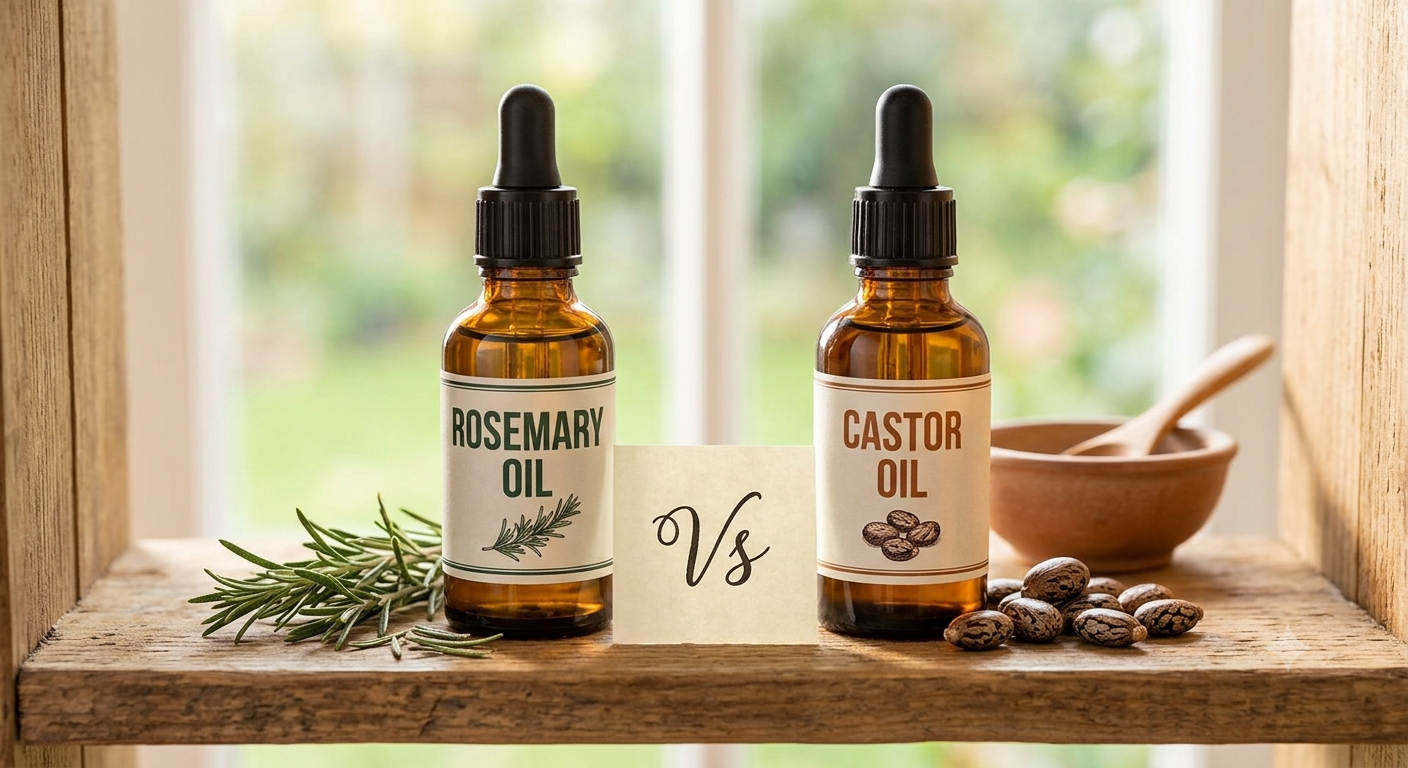

Hair loss is one of the most common health concerns in India. Stress, lifestyle issues, and nutritional gaps are driving more people to seek effective solutions. As a result, natural remedies like rosemary oil and castor oil have gained significant attention. Both oils have scientific backing, but they work in different ways. Understanding these differences can help you choose the right one for your hair type and hair loss pattern.
Why Does Hair Loss Happen?
Hair loss occurs when healthy hair follicles are damaged or weakened. Genetics, hormonal changes, stress, nutritional deficiencies, thyroid disorders, and scalp inflammation all play a role. If you notice noticeable hair loss, it is important to seek medical help. Hair loss can be a sign of a more serious health condition that needs treatment.
What Makes Rosemary Oil Effective for Hair Growth?
Rosemary oil is known for its ability to stimulate hair growth. It improves blood flow to hair follicles, which can become clogged by sebum, inflammation, or environmental dust. Research shows that rosemary oil contains bioactive compounds like carnosic acid, rosmarinic acid, and ursolic acid. These compounds are absorbed through the scalp and support follicle function.
Clinical evidence suggests that rosemary oil works as well as minoxidil in treating androgenetic alopecia, which is pattern hair loss. Its anti-inflammatory properties also help reduce scalp irritation and support healthy hair strands. However, the quality of the oil and how your body absorbs it can affect results.
What Makes Castor Oil a Hair Care Favorite?
Castor oil is thick and rich in ricinoleic acid, which helps reduce the compound linked to pattern hair loss. Its thick texture makes it ideal for deep conditioning, especially for dry and damaged hair. Castor oil can improve hair texture and may make strands appear thicker over time. However, its primary benefit is moisturizing the scalp and reducing breakage, not directly stimulating regrowth.
Rosemary Oil vs Castor Oil: Key Differences
Hair Fall Reduction
Rosemary oil supports follicle health and may promote new growth. Castor oil reduces breakage-related hair loss by conditioning and strengthening strands.
Scalp Health
Rosemary oil reduces scalp inflammation, which can interfere with hair growth. Castor oil improves hydration, making it useful for dry scalps.
Ease of Use
Rosemary oil must be diluted with a carrier oil before application. It is easier to wash out. Castor oil is thick and sticky. It may require multiple washes to remove completely.
Which Oil Is Better for Hair Thinning?
If your hair is thinning, rosemary oil is better for early-stage hair loss due to its regrowth-supporting properties. For dry, damaged hair, castor oil offers deep nourishment. Some people use both oils in rotation to get combined benefits.
How to Use Rosemary Oil Safely
Always dilute rosemary oil with a carrier oil before applying it to your scalp. Do a patch test to check for allergic reactions. Apply it in moderation and wash it off thoroughly to avoid irritation.
How to Use Castor Oil Safely
Use castor oil in small amounts and mix it with lighter oils to reduce its heaviness. Apply it mainly to the scalp and hair ends. Make sure to wash it out completely to prevent buildup and greasiness.
Are There Any Side Effects?
Rosemary oil may cause skin irritation or allergic reactions in rare cases. Castor oil can lead to scalp buildup, greasiness, or contact dermatitis in sensitive individuals. Always start with a small amount to test your tolerance.
When to See a Dermatologist
Consult a dermatologist if you experience sudden hair loss, bald patches, severe shedding, scalp pain, or hair loss after an illness. These signs may point to an underlying medical condition that needs treatment.
If your goal is hair regrowth and reducing hair loss, rosemary oil currently has stronger scientific support. Castor oil is better for improving scalp moisture and reducing breakage. The best choice depends on the underlying cause of your hair loss. Choose wisely based on your hair type and needs


 By
By