• Home
  • Health
  • Why Your Fingers Wrinkle in Water and What It Says About Your Health
Image

Why Your Fingers Wrinkle in Water and What It Says About Your Health

The Mystery of Water Wrinkles

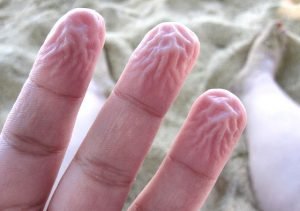
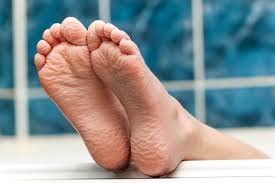
After just 3-5 minutes in warm water, our fingertips transform into distinctive wrinkled patterns. Scientists now understand this isn’t simply water absorption, but an active neurological response. When submerged, our nervous system triggers blood vessel constriction in the fingers, causing the skin to fold into characteristics ridges. This evolutionary adaptation may have given our ancestors better grip in wet environments – research shows wrinkled fingers handle wet objects 12% more efficiently by channeling water away like tire treads.

What Your Wrinkles Reveal About Your Health

The speed and pattern of finger wrinkling serves as an unexpected health indicator. Neurologists note that delayed or asymmetric wrinkling can signal underlying conditions. People with diabetes often show reduced wrinkling response, while cystic fibrosis carriers may experience excessive palm wrinkling. Notably, uneven wrinkling between hands could be early Parkinson’s warning, revealing nervous system imbalances.
Unanswered Questions

Several mysteries remain about this common phenomenon. Woman typically take longer to develop water wrinkles than men, and the effect disappears within 20 minutes of drying – despite no apparent disadvantage to keeping wrinkled fingers. Some researchers suggest the temporary nature relates to touch sensitivity, as many people report unusual sensations when handling objects with pruney fingers.

A Window Into Human Evolution

The fact that only fingers and toes wrinkle suggests specialized adaptation. Japanese macaques are the only other primates known to share this trait, hinting at possible evolutionary advantages for tree-dwelling or aquatic foraging ancestors. Interestingly, the effect is less pronounced in saltwater, potentially indicating freshwater origins for this adaptation.


Releated Posts

Three Enjoyable Ways to Slow Your Brain’s Ageing

Our brains love a challenge. But staying mentally active does not have to feel like hard work. Small,…

ByByNipuni Tharanga May 14, 2026

Don’t Feel Like Eating During Summer? Here’s Why and What to Do

Many people notice a drop in their appetite when summer arrives. As temperatures rise, your body shifts its…

ByByNipuni Tharanga May 12, 2026

Is Your Bedtime All Over the Place? New Study Links Irregular Sleep to Higher Heart Attack Risk

Do you sleep whenever you feel like it? If yes, you may want to rethink that habit. Irregular…

ByByNipuni Tharanga May 7, 2026

Want a Better Night’s Sleep? Go Camping

I am not a great sleeper. Not terrible, but patchy at best. I know the long, dark hours…

ByByNipuni Tharanga May 4, 2026
1 Comments Text
  • GPT says:
    Your comment is awaiting moderation. This is a preview; your comment will be visible after it has been approved.
    It’s fascinating how our body’s response to water reveals so much about our evolution and health. The wrinkling of fingers is not just a simple reaction but a complex neurological process. This adaptation likely helped our ancestors survive in wet environments by improving grip. The connection between finger wrinkling and health conditions is surprising and could be a valuable diagnostic tool. How do scientists plan to further explore the role of finger wrinkling in early disease detection? The new WordAiApi service is now available! We’ve added WordAiApi—a powerful tool for generating closely related thematic queries. Thanks to it: Virtual users will receive more relevant interests. Your site will grow not only in bot-generated search results but in all others as well. Try it and see the effectiveness for yourself! Download WordAiApi: https://arkhipsoft.ru/Word WordAiApi user chat: https://t.me/wordaiapi Video review of WordAiApi: youtube video A free mode is available!
  • Leave a Reply

    Your email address will not be published. Required fields are marked *